Category Archives: Closings

convenience store beverages

Florida Convenience Store Purchase

Our Florida-based clients just purchased another convenience store, adding to their portfolio.

Convenience store financing is still a very doable proposition, particularly if the sale of the business includes commercial real estate.

Senior Associate Ryan Dumas was pleased with the closing. Ryan said, “My clients have a strong partnership and very good business practices. They understand what’s needed to run a successful convenience store from inventory to staffing. And they also know the local marketplace very well with another C-store in the same metro area.”

Some deal details: The loan closed with no money down. The lenders were satisfied with the current business and required minimal documentation. There was one roadblock: the appraisal was a little lower than expected. But that did not prevent the closing. If you have a local or national asset, we encourage you to contact Ryan.

What to Consider in Purchasing a Convenience Store

  • Location: Where are your nearest competitors and what do they offer?
  • How will you differentiate yourself in the marketplace? Do you need to consider upgrading signage or inventory? If you don’t sell gas, how will you compete with stores that do?
  • Will the store operate as a franchise or be independent? What are the benefits and drawbacks of each of these decisions?
  • Will you retain current employees or hire new ones? How stable is the local employment pool?
  • How hands-on will you have to be as an owner/operator, especially during the first year of ownership? Are you prepared to be onsite regularly if necessary?
  • Crunch the numbers: How profitable has this store been before? Calculate the COGS (cost of goods sold). Compare the COGS to other nearby properties.
  • Do you have a general idea of the value of the commercial real estate? Determine if the purchase price seems realistic.
  • What will you do differently in the future to enhance revenue and keep expenses down?
  • If you aren’t already, be sure that you receive monthly financial statements including balance sheets from the current owners.
  • Know your business: its statistics, its regular payrolls costs, anticipated insurance premiums, and other regular and occasional expenses.
  • Is there upcoming deferred maintenance that will become your responsibility? How will you pay for them?
  • Hire an attorney. This is a very big step and you will be spending money and have financial responsibilities. An experienced commercial real estate attorney protects you from typical roadblocks.

Why Choose GRP Capital?

Our GRP Capital team specializes in crafting financing solutions tailored to each client’s unique goals. We even have experience with lender dropouts and critically timed funding needs.

Whether you’re purchasing, refinancing, or building from the ground up, our extensive network of lenders ensures you’ll find funding that aligns with your goals and cash flow needs.

Here’s what sets us apart:

  • We save you time by researching and identifying the best funding options for your project.
  • Our expertise spans various loan products—including non-recourse loans, SBA loans, bridge loans, and conventional financing—so you can navigate even the most complex transactions confidently.
  • Beyond lending, we provide strategic guidance on operational decisions that drive long-term business success.

Louisiana Baton Rouge hotel

Louisiana Hotel Operator Bought Hotel

Congratulations to our Louisiana client, who purchased his first hotel.

Sometimes the way into business ownership is to first work in the business. Our client had been operating and leasing a hotel, with an eye to eventually owning

The client showed fortitude through the ups and downs of the Louisiana hospitality marketplace. The larger Louisiana hotel industry has had some soft spots. Even this hotel has not been as profitable as before, but is outperforming in this specific marketplace.

Senior Associate Ryan Dumas worked very hard with this client as he encountered some challenges. Ryan said, “My team and I gave a lot of time and attention to this first-time buyer. I personally collaborated with him to prepare for the appraisal and lender site visits. It was really important for him to feel confident in being able to express his business plan and vision for the process. We also worked closely with the client’s attorney to help deal with title issues and revising operating agreements and filings.”

Tips for First Time Business Owners

  • Spend time on an accurate and complete management resume, which highlights your skills.
  • Work on a three year business plan, considering expected revenues and expenses.
  • Monitor your own personal cash flow and build up your savings.
  • You will have to prove your ability to use the business profits to pay for the new mortgage. Be sure you have adequate debt coverage. GRP Capital can review your financial statements, focusing on debt coverage.
  • If you aren’t already, be sure that you receive monthly financial statements including balance sheets from the current owners.
  • Know your business: its statistics, its regular payrolls costs, anticipated insurance premiums, and other regular and occasional expenses.
  • Are there upcoming deferred maintenance that will become your responsibility? How will you pay for them?
  • Hire an attorney. This is a very big step and you will be spending money and have financial responsibilities. An experienced commercial real estate attorney protects you from typical roadblocks.

Why Choose GRP Capital?

Our GRP Capital team specializes in crafting financing solutions tailored to each client’s unique goals. We even have experience with lender dropouts and critically timed funding needs.

Whether you’re purchasing, refinancing, or building from the ground up, our extensive network of lenders ensures you’ll find funding that aligns with your goals and cash flow needs.

Here’s what sets us apart:

  • We save you time by researching and identifying the best funding options for your project.
  • Our expertise spans various loan products—including non-recourse loans, SBA loans, bridge loans, and conventional financing—so you can navigate even the most complex transactions confidently.
  • Beyond lending, we provide strategic guidance on operational decisions that drive long-term business success.
Pennsylvania farmland

Pennsylvania Hotel Purchased with 504 Loan

Our clients successfully purchased a Pennsylvania hotel loan, using the SBA 504 loan program. They felt that the property had good revenue potential and that they were an ideal set of owner/managers.

Ultimately, GRP Capital matched the clients with a senior lender and a Community Development Corporation. Both of these are needed for a 504 loan. SBA 504 loans are especially attractive right now in the hospitality realm. Conventional lenders can still be hesitant to lend money for hotel businesses, especially outside large metropolitan areas. But the SBA guaranty is enticing to a larger group of lenders. In addition, an SBA 504 loan can be used for slightly more expensive loans

Senior Associate Ryan Dumas really enjoyed working with this partnership group. He stated, “These guys were ideal partners. They are strong, experienced, hands-on operators, who have shown previous success as owner/operators. Most importantly, they were organized, motivated and had a strong business plan. At least one partner knew the area well and was ready to be on-site. This property will benefit from their hands-on, knowledgeable management.”

Advantages of an SBA 504 Loan

  • Lower down payment/equity injection
  • Competitive fixed-rate financing for the life of the loan
  • Long repayment periods (up to 25 years)
  • Affordable payments as a result of the loan repayment periods, which impacts cash flow immediately

Should you consider a 504 loan?

• Are you and all owners of the borrowing entity U.S. Citizens? As of this writing, the SBA regulations require that an applicant for a 504 loan or a 7A loan must consist of 100% citizens. (In the past, a borrowing entity could have a small percentage of permanent residents, that is Green Card holders.)

• Are you current with all previous SBA loans? Each partner of the borrowing entity will have to disclose their current and past SBA loans. Any loans that are not in good standing could delay or prevent the loan from closing. Be particularly mindful of previous EIDL (Economic Injury Disaster Loans). How to find out if you are current with your EIDL loans?

• What’s your timeline? SBA 504 loans can take a little bit longer to close, because two entities are underwriting the loan. If you are considering accessing this type of loan, make sure your Purchase Sale Agreement (PSA) allows enough time to close. Consider engaging an attorney to represent you through this part of the process.

More information about the SBA Debenture Process

Why Choose GRP Capital?

Our GRP Capital team specializes in crafting financing solutions tailored to each client’s unique goals. We even have experience with lender dropouts and critically timed funding needs.

Whether you’re purchasing, refinancing, or building from the ground up, our extensive network of lenders ensures you’ll find funding that aligns with your goals and cash flow needs.

Here’s what sets us apart:

  • We save you time by researching and identifying the best funding options for your project.
  • Our expertise spans various loan products—including non-recourse loans, SBA loans, bridge loans, and conventional financing—so you can navigate even the most complex transactions confidently.
  • Beyond lending, we provide strategic guidance on operational decisions that drive long-term business success.

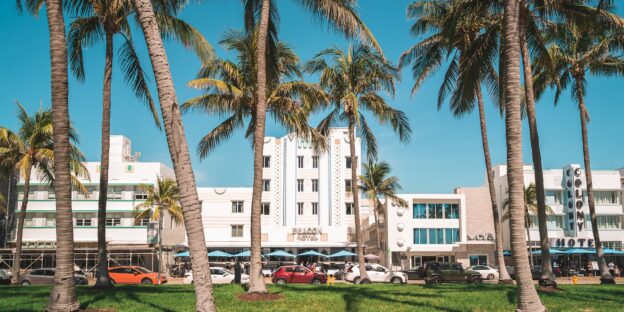
Bridge Financing Closes for Miami Beach Boutique Hotel

Picture a boutique hotel a block from the ocean on Miami Beach, its Art Deco lines catching the South Beach light. Our clients, an experienced investment group and repeat clients of GRP Capital, were ready to add this property to their portfolio, and they wanted to move quickly.

Boutique hotels in premier markets like Miami Beach are prized assets, but they can be tricky to finance. The purchase price reflects the location and the upside, and the ownership was organized as an investment fund, a structure that not every lender wants to underwrite. Speed mattered too. Our clients needed to close on a tight timeline to secure the property.

A bridge loan was the right tool. Bridge financing gave the borrowers the speed and flexibility to acquire the asset now and execute their business plan, with a clear path to permanent financing once the property stabilizes. GRP Capital placed the sub-$10 million loan with a lender who knew the market and could close fast.

Krishan Patel, Managing Director of GRP Capital, stated, “These are sophisticated, repeat clients who know the Miami Beach market well. The property is a special one, and the ownership structure called for a lender comfortable with an investment fund and a boutique asset. We focused on speed and certainty of close, and we placed the loan with a partner who shared that urgency. It is exactly the kind of premium, complex transaction our team is built to handle.”

Bridge loans are powerful, but they are not the right fit for every borrower or every property. Here is what to understand before you use one.

What to Know About Bridge Financing:

• Bridge loans buy time: A bridge loan is short term, typically twelve to twenty-four months, and lets you acquire or reposition now and refinance once the numbers support it.

• Speed is the advantage: Bridge lenders can often move faster than SBA or conventional lenders. When a purchase depends on a tight closing, that speed can be the difference between getting the property and losing it.

• Price reflects flexibility: Bridge rates run higher than SBA or conventional rates. That premium buys speed, flexibility and a structure that fits complex ownership. Build the cost into your business plan and your exit.

• Have an exit in mind: The strongest bridge borrowers know how they will get out, usually a refinance after stabilization. Plan the exit before you take the loan, not after.

Why Choose GRP Capital?

Our GRP Capital team specializes in crafting financing solutions tailored to each client’s unique goals. We even have experience with lender dropouts and critically timed funding needs.

Whether you’re purchasing, refinancing, or building from the ground up, our extensive network of lenders ensures you’ll find funding that aligns with your goals and cash flow needs.

Here’s what sets us apart:

  • We save you time by researching and identifying the best funding options for your project.
  • Our expertise spans various loan products—including non-recourse loans, SBA loans, bridge loans, and conventional financing—so you can navigate even the most complex transactions confidently.
  • Beyond lending, we provide strategic guidance on operational decisions that drive long-term business success.

Large Gulf Coast Hotel Loan Closes for Conversion

Our clients wanted to buy a large hotel on Florida’s Gulf Coast and convert it into a dual brand property, with standard guest rooms on one side and extended stay suites on the other. The two brands would share a building, a staff and a management team, while giving travelers two price points to choose from. They needed a construction to permanent loan to cover both the purchase and the conversion work. At $16.5 million, it was no small project.

A purchase this size comes with a deeper file. Our clients are experienced operators with ownership interests in more than a dozen affiliated businesses. That is a strength in credit, and it also means a long document list.

Credit was never what held this loan up. The financing came together and the bank was ready to fund. Then a question came up that very few buyers think to ask before they sign a contract: how many rooms does the hotel actually have?

The building’s plans and the county’s records did not agree. Where two guest rooms connect through an adjoining door, the county counts the pair as a single permitted unit, while the plans count two sellable keys. Both records were accurate. They were simply counting different things. However, until the two were reconciled, a bank that wanted to lend could not close.

Rick Patel, GRP Capital President, commented, “This was a large loan and none of the difficulty was in the credit. The borrowers are experienced operators and the bank wanted the deal. What stopped us was a difference between how the plans counted rooms and how the county counted units. Our team and the borrowers’ team worked that record down together. Large hospitality loans take patience and a great deal of coordination. I was very pleased with how everyone stayed with this one, and it showcased our GRP Capital team’s ability to handle and close a complicated transaction.”

Buying a hotel that you intend to convert is a different exercise from buying one you intend to operate as it is. You are underwriting the property you will have, not only the property you are standing in, and the public record has to support both. Here is what we would tell any buyer considering a conversion.

Before You Buy a Hotel You Plan to Convert:

• Confirm how the municipality counts your rooms: Your franchise counts sellable keys. Your county or city may count permitted units, and those two numbers are not always the same. Connecting doors, converted storage space, and suites that were once two rooms can all move the count. Ask the planning department what is on record before you are under contract, not after your lender has issued a commitment.

• Pull the permit history early: Work that was never formally closed out does not go away. Expired permits and small open items from years before your purchase will surface in the lien and title search, and each one has to be reopened and closed out before a lender funds. These are usually easy fixes. They are also usually found late, which is what makes them expensive.

• Order the environmental report right away: A Phase I is a gating item, which means nothing closes without it. Order it at the front of the process. Most findings turn out to be minor housekeeping matters with a clear path to resolution, but only if there is still time on the calendar to walk that path.

• Start the affiliate package the day you sign a term sheet: Lenders underwrite the whole borrower, not just the property. If you hold interests in other businesses, expect to produce returns for all of them, generally for two years, plus statements. This is almost always the longest lead item in the file. Begin it immediately and send it in organized batches rather than waiting to submit one perfect package.

• Leave room in your schedule for a municipal answer: A bank can move in a day. A county moves on its own calendar, and urgency on your side does not change that. When your closing depends on a local government confirming something, build the timeline around their pace and keep a second approach ready in case the first one stalls.

More information on hospitality loans

Why Choose GRP Capital?

Our GRP Capital team specializes in crafting financing solutions tailored to each client’s unique goals. We even have experience with lender dropouts and critically timed funding needs.

Whether you’re purchasing, refinancing, or building from the ground up, our extensive network of lenders ensures you’ll find funding that aligns with your goals and cash flow needs.

Here’s what sets us apart:

  • We save you time by researching and identifying the best funding options for your project.
  • Our expertise spans various loan products—including non-recourse loans, SBA loans, bridge loans, and conventional financing—so you can navigate even the most complex transactions confidently.
  • Beyond lending, we provide strategic guidance on operational decisions that drive long-term business success.

Pari Passu Financing Closes for a Central Florida Hotel

Our clients set out to buy two Florida hotels at once, both out of a receivership sale. This is the first of the two: a select service hotel carrying a national flag. The second, a conversion, closed two weeks later.

Buying out of receivership rewards buyers who can move with certainty. The seller is a court-appointed receiver, timelines are set by the process rather than negotiated, and financing contingencies get very little sympathy. Our clients needed a lender who could underwrite two hotel acquisitions in parallel and commit to both.

The purchase also came with a substantial renovation. The property required a $2 million property improvement plan, with the brand standard pre-approved before closing. A hotel under renovation does not produce the cash flow a stabilized one does, so the loan had to carry the property through the work rather than assume it would perform from day one.

The structure did that in three ways. First, a pari passu split: a $5 million SBA 7(a) loan alongside a conventional loan, funding together and sharing collateral, which delivered more proceeds than either program could have on its own. Second, an eighteen month interest-only period ahead of a 300 month amortization, so payments stay light through the renovation. Third, a funded interest reserve, money set aside inside the loan to make the payments during the year the property is being rebuilt.

The total came to just over $6 million, and the deal cleared both the lender’s loan committee and a size-triggered board review to close on its target date.

Krishan Patel, Managing Director of GRP Capital, stated, “Our clients had a clear plan and the experience to execute it, and the job was to build a structure that gave the property room to be renovated before it had to perform. The interest reserve is what makes a deal like this work. Without it you are asking a hotel to service full debt while half of it is out of service. Getting the brand’s approval on the renovation before we closed took the biggest unknown off the table for the lender.”

A hotel purchase that comes with a major renovation is underwritten differently from one that does not. Here is what buyers should understand going in.

Financing a Hotel Purchase With a Major Renovation:

• Expect the lender to underwrite two properties: They are looking at the hotel as it is today and the hotel it will be after the work. Both matter, and the gap between them is where the structure gets built.

• Ask about an interest reserve: If the property will be partly out of service, funded interest inside the loan covers the payments through the disruption. It is the single most useful tool for a purchase-plus-renovation, and it has to be sized at closing, not requested later.

• Understand pari passu: Pairing an SBA loan with a conventional loan that funds alongside it lets a deal reach a size neither program supports by itself. The two loans share collateral and close together. It adds coordination, and it opens up deals that would otherwise not get financed.

• Get the brand’s approval before you close: A renovation scope that the franchisor has already signed off on is a known quantity. One that is still under discussion is a risk the lender has to price, and they will.

• Do not underestimate a receivership timeline: Court-driven sales move on their own calendar. Have your financing genuinely ready rather than merely likely, because there is rarely room to extend.

Why Choose GRP Capital?

Our GRP Capital team specializes in crafting financing solutions tailored to each client’s unique goals. We even have experience with lender dropouts and critically timed funding needs.

Whether you’re purchasing, refinancing, or building from the ground up, our extensive network of lenders ensures you’ll find funding that aligns with your goals and cash flow needs.

Here’s what sets us apart:

  • We save you time by researching and identifying the best funding options for your project.
  • Our expertise spans various loan products—including non-recourse loans, SBA loans, bridge loans, and conventional financing—so you can navigate even the most complex transactions confidently.
  • Beyond lending, we provide strategic guidance on operational decisions that drive long-term business success.

Hotel Conversion Closes in the Orlando Market

Two weeks after closing the first of two Florida hotels, the same clients closed the second half of their plan: a second property from the same receivership sale, converting to a national select service brand.

A conversion is a different proposition from a purchase. The building is being bought as one thing and financed as another. Underwriting has to look past the property’s current performance to what it will produce once it carries a national flag, and that gap has to be bridged with structure rather than optimism.

The renovation reflected it. Converting the property required a $3.5 million property improvement plan, a considerably larger scope than the first property. The financing followed the same logic as the first deal: an SBA 7(a) loan of $5 million funding pari passu alongside a conventional loan, with a funded interest reserve carrying the payments through the conversion year.

The franchise side ran in parallel. The franchise disclosure document was signed with its mandatory fourteen day cooling-off period built into the schedule, so the brand approval and the loan approval landed together rather than one waiting on the other.

Projections are where hotel deals most often go sideways, and this one is a good example of why they deserve real scrutiny. We review the numbers with our borrowers and test the assumptions before anything reaches a lender.

Rick Patel, GRP Capital President, commented, “This was the second closing in a month for this client group and they earned it. A conversion asks a lender to underwrite a property that does not exist yet, so the numbers have to be defensible and the brand timeline has to be real. Our team spent its time on the projections and on the paperwork, because those are the two places these deals actually break. The financing structure was the easy part once the rest was solid.”

Converting a hotel to a new brand changes what a lender is underwriting. Here is what owners should know before they start.

Converting a Hotel to a New Franchise Flag:

• The lender is underwriting a property that does not exist yet: Current performance tells them where you are starting, not where you are going. Expect them to test your post-conversion assumptions hard, and expect to defend them line by line.

• Build the franchise timeline into the loan timeline: A franchise disclosure document carries a mandatory fourteen day cooling-off period before you can sign. Sequence it alongside underwriting rather than after, or the two calendars will collide at the worst moment.

• Size the renovation honestly: A conversion PIP is usually larger than a brand-standard refresh, and it is the number most often understated at the start. A scope that grows after closing is a funding gap you will have to cover yourself.

• Test your own projections before the lender does: Growth assumptions that do not match the revenue lines beneath them, and reserves that do not match their stated percentage, get found in underwriting. Finding them first is faster, and a conservative model that survives scrutiny is worth more than an optimistic one that does not.

• Check every signature before the package ships: An unsigned document discovered at closing is pure delay. It is the least interesting reason to miss a date and one of the most common.

Why Choose GRP Capital?

Our GRP Capital team specializes in crafting financing solutions tailored to each client’s unique goals. We even have experience with lender dropouts and critically timed funding needs.

Whether you’re purchasing, refinancing, or building from the ground up, our extensive network of lenders ensures you’ll find funding that aligns with your goals and cash flow needs.

Here’s what sets us apart:

  • We save you time by researching and identifying the best funding options for your project.
  • Our expertise spans various loan products—including non-recourse loans, SBA loans, bridge loans, and conventional financing—so you can navigate even the most complex transactions confidently.
  • Beyond lending, we provide strategic guidance on operational decisions that drive long-term business success.

Blueprint for hotel construction loan

Hotel Construction Loan Closes

Hotel construction loans can be complicated. And our Florida clients’ hotel construction loan had hit some roadblocks.

They were busily building a Fairfield Inn, working closely with their general contractor (GC). They had secured an original construction loan to cover the earliest costs of the project. However, their lender ended up not renewing their loan in the midst of the construction process.

Our clients were in a pickle: they were mid-construction but without secure financing. They come to GRP Capital for our advice and for stable lending. We were very pleased to secure permanent funding and they are on target to welcome guests in the very near future.

Rick Patel, GRP Capital President reflected on the loan closing, stating, “We really wanted to help these clients. They know the hospitality market and were well capitalized for this large construction project. They had just experienced a lender drop-off during a critical time. As a result, this could have been an anxious time. Instead, we all worked steadily as a team through a number of issues. We always had faith in our clients and their vision for this Fairfield construction. And we believe we conveyed that story to the lenders, too. Ultimately, I was proud of the client partners and our GRP Capital team.”

Hotel Construction Loans Basics:

• Do your due diligence on a general contractor There is no more important person during the construction process than your GC. Make sure your GC has done a similar project and that they have gone through a lender approval process. Your GC manages every aspect of construction, from hiring subcontractors and staying on top of permitting. Even more importantly, your GC is in charge of producing and maintaining a budget and a an up-to-date log of all costs incurred.

• Engage a knowledgeable attorney: Construction costs can be high. Nevertheless, don’t try to save money by not engaging a knowledgeable attorney early in the process. Expert legal help from the beginning can save you time and money as you get closer to closing. Your lawyer can help guide you through the regulatory maze and also work to mitigate risks in case of disputes and other issues.

• Keep meticulous records on ongoing expenses: Construction loans are a moving target, especially if money is already being spent. Lenders want to reimburse their clients for genuine expenses, but need the expenses organized in specific ways. Your GC and the lender will be collaborating on this. Again, a GC with good interpersonal skills is an asset in this phase, too.

• Don’t start work until you have permits: Clients often get quite excited with a new construction project and want to break ground as soon as the ink is dry on the land purchase. We cannot emphasize enough the important of first obtaining permits. Your attorney and your GC should know the local landscape, in terms of permitting authorities. Take the time now, so everything is above board or you may have early unnecessary costs that you cannot recoup.

Why Choose GRP Capital?

Our GRP Capital team specializes in crafting financing solutions tailored to each client’s unique goals. We even have experience with lender dropouts and critically timed funding needs.

Whether you’re purchasing, refinancing, or building from the ground up, our extensive network of lenders ensures you’ll find funding that aligns with your goals and cash flow needs.

Here’s what sets us apart:

  • We save you time by researching and identifying the best funding options for your project.
  • Our expertise spans various loan products—including non-recourse loans, SBA loans, bridge loans, and conventional financing—so you can navigate even the most complex transactions confidently.
  • Beyond lending, we provide strategic guidance on operational decisions that drive long-term business success.

East texas yellow rose

New Franchise for East Texas Hotel Loan

Our East Texas clients were ready for a new franchise. After operating a Wyndham Baymont property for several years, they were ready to switch to an IHG Garner flagged hotel. The change would bring down their franchise fees. In addition, the new franchise affiliation would also decrease their third party booking fees. Finally, their new loan refinanced previous debt and also covered a lot of the cost of the reflagging.

GRP Capital worked hard to find a lender willing to make a hospitality loan outside of the largest Texas metropolises. Helping the lender understand the benefits of the new franchise was crucial to the underwriting process.

Krishan Patel, Managing Director of GRP Capital stated, “The hotel owners had demonstrated very strong prior management. Their hotel was already healthy and cash flowing. They had done their due diligence and believed that affiliating with a new franchise would have an immediate impact on both their revenues and their expenses. Ultimately, it was our job to tell their story to lenders and find a good match for them. I was very pleased that this loan closed quickly. Hospitality loans outside the major cities often are harder to place and close, but this project was strong from the beginning.”

In the end, having a large lender network allowed GRP Capital to find an appropriate lender and close the loan as quickly as possible.

Are You Considering a New Franchise Affiliation?

• Compare franchise fees: A basic part of a franchise agreement is the percentage of revenues (franchise fee) that come directly to the franchise. So it’s important to compare these numbers. However, be aware that there is variety in the industry. Franchise fees differ not only by flag, but also by type of property (economy, mid-scale, luxury).

• Determine how your franchise affiliation benefits you: Different franchises and different brands within the franchise offer various benefits. Does your franchise have a popular loyalty program? That can really improve your market penetration. Does your brand have general strong marketing and advertising that benefits the franchisees?

• Calculate the costs for reflagging: What will your immediate costs be? You will have to engage in a PIP (Property Improvement Plan). The PIP typically includes refreshing and renovations from the parking lot to the lobby to the guest rooms. And sometimes these are quite extensive. Calculate these costs from furniture to labor, to a big new outdoor sign.

• Consider hiring an attorney to negotiate with the franchise: Your franchise agreement is a long, complex document, that obligates you for many years. An attorney with experience in dealing with franchises can negotiate fees as well as the PIP components to your advantage. This can save time and also position you best in your marketplace.

• Choose the best timing for a transition. A new franchise requires multiple steps. Consider your labor pool and your high season. How can you fit in a transition that is the least disruptive and costly to your business? Do you need to build in some interest only time in your loan if your revenues will be sharply curtailed?

• Learn about all types of loans: There are many types of hospitality loans, including conventional loans, SBA loans, bridge loans and non-recourse loans. Small Business Administration (SBA) loans are often the best matches for hospitality loans. Crucially, the SBA is willing to guarantee a larger variety of hospitality loans, including economy and mid-scale properties.

Why Choose GRP Capital?

Our GRP Capital team specializes in crafting financing solutions tailored to each client’s unique goals.

Whether you’re purchasing, refinancing, or building from the ground up, our extensive network of lenders ensures you’ll find funding that aligns with your goals and cash flow needs.

Here’s what sets us apart:

  • We save you time by researching and identifying the best funding options for your project.
  • Our expertise spans various loan products—including non-recourse loans, SBA loans, bridge loans, and conventional financing—so you can navigate even the most complex transactions confidently.
  • Beyond lending, we provide strategic guidance on operational decisions that drive long-term business success.

Creative Financing for Purchase of Fairfield Inn

Our clients had their eyes on a North Texas Fairfield Inn. The sellers no longer wanted to operate this property as they had moved on to other ventures. They were insistent on a very tight timeline to sell.

The clients came to GRP Capital with good information on the property, very strong prior ownership and management experience, but with this tight timeline. They looked to GRP Capital to match them with a lender and to close before the sellers’ deadline.

Our GRP Capital team worked quickly to find a solution. We investigated all types of loan structures from conventional to SBA. Ultimately, the clients and GRP Capital settled on a two part pari passu loan, consisting of partial SBA financing. This loan met the needs of the clients’ leverage and fit into their business plan. A pari passu loan has components of the debt and each part is on equal footing to the other. That means that no loan is subordinate to one another.

Rick Patel, President of GRP Capital remarked, “I was very happy to see our clients take possession of this Fairfield Inn. It took some extra hard work and creativity to structure this loan. As a result, both the clients and the lender are satisfied with the outcome. The new loan has an SBA guaranteed component. And most importantly, we were able to close the loan pretty fast, keeping both the buyers and the sellers satisfied. We are still very confident in the abilities of our experienced hospitality owners to successfully manage newly acquired properties. That being said, we often have to provide guidance to lenders, helping them to see our client’s vision and to collaborate on a loan structure that will be approved by the leadership of the lender.”

Having a large lender network allowed GRP Capital to find an appropriate lender and close the loan as quickly as possible.

What Do you Need to Close a Loan Quickly?

The right type of project. Refinancing loans can typically close more quickly than construction loans. Purchasing an existing business with a track record makes underwriting easier and hopefully faster. This loan was for the purchase of an existing hotel with clear, reliable statistics about previous performance. Thus, a fast closing was a doable proposition. 

Type of loan matters, too. A fast closing can be possible for a bridge loan. However, SBA loans can sometimes take longer to underwrite. Understand that lenders and agencies’ timelines may lead the process. 

Good Lines of Communication with a Seller, if applicable. When you are purchasing commercial real estate and the business, the lender will need documents and information from the seller. In some cases, the buyers and sellers are a good match and communicate honestly. Sometimes brokers can be the best point of contact. GRP Capital works and communicates with whomever the borrowers determine can get the information, so we can close.

Current guarantor documents. Be prepared to furnish tax returns. If you have other businesses, make sure you have up-to-date financial statements. Gather business debt schedules. Compile two months worth of personal and business bank statements, especially if you will be making an equity injection. Know your personal debt, like car payments and residential mortgages.

Accurate and thoughtful business plans and projections.Spend some time at the beginning of the loan process creating a strong business plan. This should include not only your projections for future income and expenses. It should also include your ideas for operating and managing the business, including marketing, personnel, financial management and maintenance. 

Engage competent professionals right away. Engage an attorney, even before signing a purchase-sale agreement. Tell your accountant of your loan process, and that you may need more recent financials. If you have had a good experience with a title company in the past, make plans to use them again. If you need a survey, get right on that, as these can take some time.

Need more information on creating a strong business plan?

Why Choose GRP Capital?

Our GRP Capital team specializes in crafting financing solutions tailored to each client’s unique goals.

Whether you’re purchasing, refinancing, or building from the ground up, our extensive network of lenders ensures you’ll find funding that aligns with your goals and cash flow needs.

Here’s what sets us apart:

  • We save you time by researching and identifying the best funding options for your project.
  • Our expertise spans various loan products—including non-recourse loans, SBA loans, bridge loans, and conventional financing—so you can navigate even the most complex transactions confidently.
  • Beyond lending, we provide strategic guidance on operational decisions that drive long-term business success.